In euchre, 'next' refers to calling the suit of the same color as the turned-down card in round two of bidding. If spades were turned down, calling clubs is 'next' — because spades and clubs are both black suits. Calling next is often a strong play because your opponents likely passed in round one partly due to weakness in that color, and the Left Bower of the turned-down suit is now your Left Bower in the next suit. 'Reverse next' (also called crossing) means calling a suit of the opposite color instead.
“Next” is one of the most frequently referenced concepts in euchre bidding — every experienced player knows the term, but beginners often encounter it without a clear explanation. This page covers exactly what next means, why it is a strategically useful concept, and when to use it.
What Is Next?
After round one of bidding, if all four players pass, the dealer turns the face-up kitty card face-down and round two begins. In round two, any player may name any suit as trump — except the one that was just turned down.
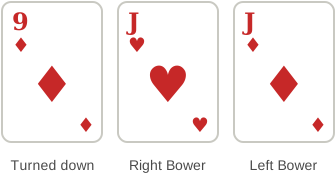
Next is the informal name for calling the suit of the same color as the turned-down card:
| Turned-down suit | Next suit |
|---|---|
| Spades ♠ (black) | Clubs ♣ (black) |
| Clubs ♣ (black) | Spades ♠ (black) |
| Hearts ♥ (red) | Diamonds ♦ (red) |
| Diamonds ♦ (red) | Hearts ♥ (red) |
If spades were turned down and you call clubs in round two — you are calling next.
What Is Reverse Next (Crossing)?
The opposite call is reverse next or crossing — naming a suit of the opposite color from the turned-down card:
| Turned-down suit | Cross suits |
|---|---|
| Spades ♠ (black) | Hearts ♥ or Diamonds ♦ |
| Clubs ♣ (black) | Hearts ♥ or Diamonds ♦ |
| Hearts ♥ (red) | Spades ♠ or Clubs ♣ |
| Diamonds ♦ (red) | Spades ♠ or Clubs ♣ |
Both next and crossing are valid plays — the question is which hand composition supports which call.
Why Next Is Often a Strong Call
1. The Left Bower Advantage
What the data says: in our simulation of a million deals, first seat holding two trump made its bid 68% of the time calling next vs 51% calling a cross suit. But the edge belongs to the dealer’s opponents. For the dealer’s partner, calling cross (“reverse next”) did better.
The most important reason next is often strong: the Jack of the turned-down suit becomes your Left Bower when you call next.
Example: Spades were turned down. You call clubs as next.
- Jack of Clubs = Right Bower (highest trump)
- Jack of Spades = Left Bower (second-highest trump, now a club for this hand)
If you already hold the Jack of Spades in your hand, calling clubs next immediately gives you the Left Bower. Combined with the Right Bower (Jack of Clubs), you have two of the three most powerful cards in the game before a single trick is played.
2. Opponent Weakness in That Color
All four players passed on the same-color suit in round one. While opponents may have passed for many reasons, there is a higher-than-average chance they are short on that color — especially the high cards. Calling into that color can exploit positional weakness.
3. Your Own Strength in That Color
If you hold strength in the same color as the turned-down suit — say, you have the Jack of Spades and two other clubs when clubs were turned down and spades are next — you are perfectly positioned to call next and have genuine trump strength.
When Not to Call Next
Next is not automatic. The name implies it is the “obvious” follow-up call, but calling next on a weak hand is just as dangerous as any other weak call.
Avoid calling next when:
- You do not hold the Left Bower (Jack of turned-down suit)
- You have fewer than 2 or 3 trump in the next suit
- Your hand is stronger in a cross-suit — call crossing instead
- Your seat position makes a weak call especially risky (first seat is most exposed)
Next vs. Crossing: Which to Call?
| Factor | Favors Next | Favors Crossing |
|---|---|---|
| Hold Jack of turned-down suit | ✓ Strong next | — |
| Strong in opposite-color suit | — | ✓ Cross into strength |
| Opponents passed a same-color card | ✓ They may be weak there | — |
| You hold no trump in next suit | — | ✓ Don’t force it |
| Need a risky call (behind in score) | Either can work | Either can work |
Next and Seat Position
Seat position matters for second-round calls, and our simulation shows the effect clearly. The rule of thumb: the dealer’s opponents should call next, and the dealer’s partner should cross.
| Seat | Two trump: next makes | Two trump: cross makes | Better call |
|---|---|---|---|
| First seat (left of dealer) | 68.3% | 51.1% | Next |
| Dealer’s partner | 62.4% | 68.1% | Cross |
| Third seat (right of dealer) | 57.9% | 52.9% | Next |
| Dealer | 62.5% | 54.2% | Next with 2 trump, cross with 3 |
- First seat (left of dealer): this is where next shines. The dealer turned down a card of that color, which is a sign their team is short in it. With two trump including a bower, calling next is usually right.
- Second seat (dealer’s partner): your own partner turned the color down, so the signal points the other way. Prefer a cross suit where you’re strong.
- Third seat: next is still good, because you’re the dealer’s opponent. If second seat passed in round two, though, they may be weak in that color too.
- Dealer: under Stick the Dealer you may have to call. In our data, next was the better call with only two trump and cross was better with three.
Practical Example
Setup: Spades are turned down. You are in first seat for round two. Your hand: Jack of Spades, 9 of Clubs, Ace of Hearts, King of Diamonds, 9 of Diamonds.
- Jack of Spades = Left Bower if you call clubs next
- 9 of Clubs = low trump
- Ace of Hearts, King of Diamonds = off-suit winners
Call next (clubs)? You have the Left Bower and one other trump. Two trump is on the low end but the Left Bower is guaranteed. With two off-suit high cards, this hand can realistically win 3 tricks. A next call here is defensible from first seat.
Cross instead? You have Ace of Hearts and King of Diamonds — red suit strength — but no supporting trump. Crossing into hearts or diamonds without a Bower is risky; you would have only off-suit winners with no guaranteed trump.
Verdict: Call clubs next. The Left Bower anchors the hand.
Related Pages
- Euchre Bidding Rules — Complete round-one and round-two rules
- Bidding Strategy — Full hand evaluation guide
- Euchre Bowers Explained — Why the Left Bower changes in next calls
Frequently Asked Questions
What does 'next' mean in euchre?
Next refers to calling the suit of the same color as the card that was turned down in round one of bidding. If the face-up card was a spade (black) and all players passed, calling clubs (also black) in round two is 'calling next.' The term reflects that you are calling the suit closest in color to the one that was rejected.
Why is calling next considered a strong play?
Calling next is often strong for two reasons. First, the Left Bower of the turned-down suit becomes your Left Bower when you call next — for example, if spades were turned down and you call clubs, the Jack of Spades is now your Left Bower (the second-highest trump card). Second, opponents who passed on the same-color suit in round one may be weak in that color, reducing their trump holdings.
What is reverse next (crossing) in euchre?
Reverse next, also called crossing, means calling a suit of the opposite color from the turned-down card in round two. If a black suit was turned down, calling hearts or diamonds (both red) is crossing. Crossing is generally considered riskier than next because it does not give you an automatic second bower, but a strong hand in a cross-suit can make it the right call.
Should you always call next in euchre?
No. Calling next is a useful concept but not an automatic decision. You should call next only if your hand can support it — ideally holding the Jack of the turned-down suit (which becomes your Left Bower) and at least one or two other trump cards. Calling with weak trump support in the next suit is just as dangerous as any other weak call.
What happens to the Left Bower when you call next?
When you call next, the Jack of the turned-down suit becomes your Left Bower. For example: clubs were turned down, you call spades as next. The Jack of Clubs — which would have been the Left Bower if clubs were trump — is now the Left Bower for spades (since spades and clubs share the same black color). If you already hold that Jack, you start with two bowers.